Parthenon’s Light Secrets Unveiled: A Divine Greek Illusion
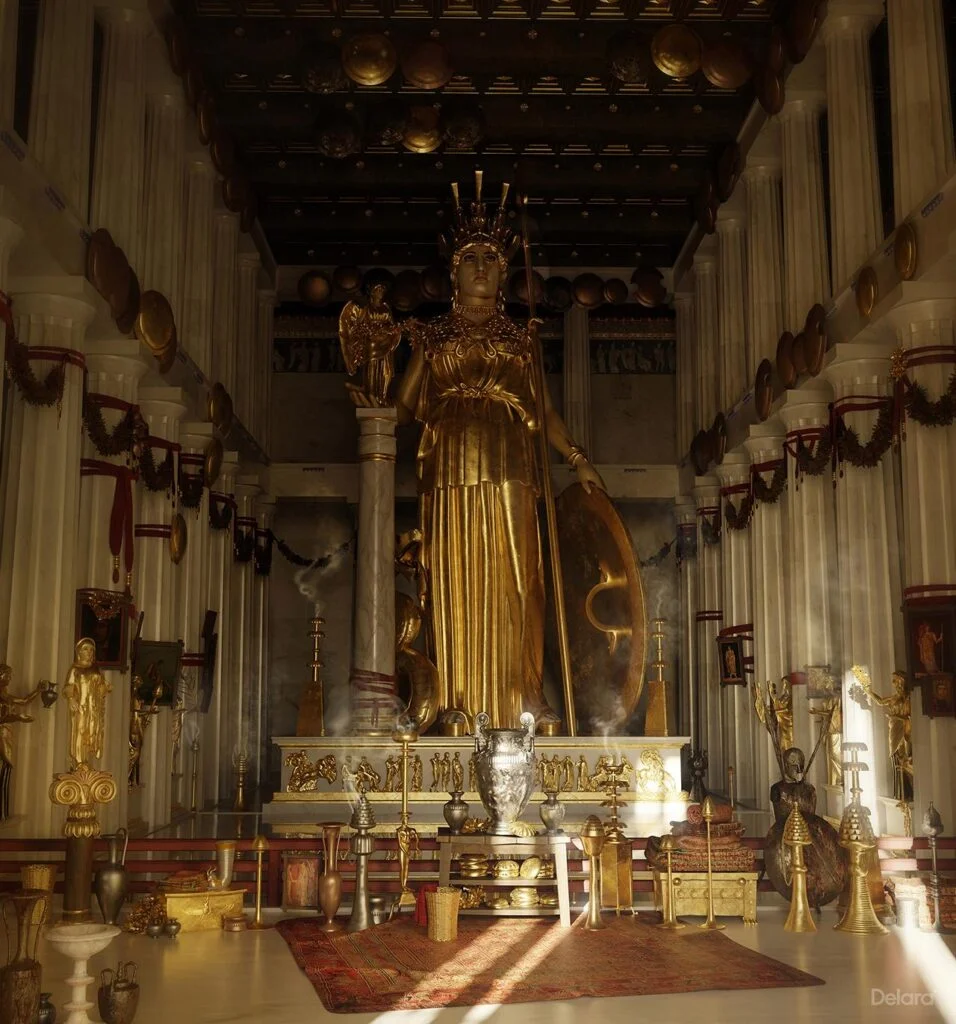
Oxford archaeologist reveals how ancient Greeks used sunlight illusions in the Parthenon to awaken Athena’s glory, blending sacred design with divine brilliance.
1. How did Oxford crack a 2,400-year-old sacred illusion?
On May 7, 2025, Oxford archaeologist Prof. Juan de Lara revealed a stunning truth—Athens’ Parthenon wasn’t just a temple, it was optical theatre. Using 3D models with only 2 cm error, his team proved the temple was built dim on purpose. This light-play transformed rituals. His peer-reviewed study published in The Annual of the British School at Athens finally solved an 18th-century architectural mystery.
2. Why did ancient Greeks keep the Parthenon dark inside?
We imagine Greek temples as sun-drenched white spaces—but de Lara’s work proves the opposite. The Parthenon was deliberately dim to create a dramatic backdrop. Over 60% of the temple’s inner area received no direct light. Reflective water basins and dark interiors made a single sunbeam feel divine. Like entering a theatre, worshippers experienced suspense, then awe, when light struck the statue of Athena.
3. What made Athena’s golden robe shimmer like magic?
Every four years during the Panathenaic Festival, at a precise morning hour, sunlight entered the Parthenon’s eastern doorway and hit the statue of Athena. This wasn’t luck—it was engineered. Simulations used ivory’s reflectivity index (~70%) and gold’s (~95%) to show a beam lighting up her robe in shimmering brilliance. Over 100 simulations confirmed this celestial moment. It was the original “divine spotlight,” centuries before stage lighting existed.
4. How did digital archaeology resurrect a lost ritual?
De Lara’s team used high-resolution scans and solar path data to build a 3D model of the Parthenon accurate to under 2 cm. Over 120 light simulations tested beam paths during ancient festivals. Material properties—marble, gold, and ivory—were digitally rendered. This model isn’t just academic; it’s now powering VR exhibits in museums. Oxford is offering it to cultural institutions worldwide to revive sacred Greek storytelling.
📌 Quick Fact Box: Parthenon’s Sacred Light Illusion
📍 Place: Athens, Greece
📆 Date of Publication: May 7, 2025
🔬 Research Lead: Prof. Juan de Lara, Oxford
🪞 Materials Used: Ivory, Gold, Polished Marble
🌞 Light Technique: Solar beam during festival morning
🧪 Tech Used: 3D modeling, Light Simulation, Solar Data
🏛️ Historical Puzzle Solved: Dating back to 18th century
🎓 Published In: The Annual of the British School at Athens
5. What ancient debate did this research finally end?
Back in the 1700s, architect Quatremère suggested roof openings lit the Parthenon. A century later, Fergusson proposed clerestory windows. De Lara’s findings show both were partly right. It was a system: roof apertures, reflective water pools, translucent ceiling materials—all worked together. This unifying conclusion resolves a 250-year-old disagreement. According to The Hindu, this may change how ancient architecture is taught across universities globally.
6. Why are modern museums rethinking Greek temple displays?
Over 70% of current temple reconstructions, including major museums in Europe and India, portray temples as fully lit. This research challenges that. Greek worship involved sensory transition—light to dark, then divine glow. Museums like the British Museum and Acropolis Museum are reimagining exhibits to match this finding. Indian cultural centers are also exploring VR recreations, connecting India’s own traditions of sacred lighting with Greek parallels.
7. What do experts say about this game-changing discovery?
“This was emotional architecture at its peak,” said historian Helena Wrigley to The Times of India. De Lara added, “Light wasn’t decorative—it was sacred choreography.” According to Indian Express, this discovery “replaces sterile classicism with living spiritual drama.” Oxford Archaeology Committee declared it a milestone in experiential reconstruction. As new museum projects roll out, de Lara insists, “Tech is no longer a tool—it’s a bridge to ancient minds.”
What makes this story a must-read
It blends sacred art, solar science, and emotion to reveal how light once breathed life into stone—forever changing Greek temple storytelling.
This article was originally published in Annual of the British School at Athens.
Share this content:











Post Comment